
Openbaarmaking van partners: SewingInsight.com is deelnemer aan het Ebay Partner Network en Amazon Services LLC Associates Program. We verdienen een kleine advertentievergoeding door te linken naar producten op Ebay en Amazon. Dit verhoogt de prijs voor u als lezer niet, maar u steunt onze kleine onderneming.

Review van de Brother LX3817: Is de goedkoopste Brother naaimachine zijn geld waard?
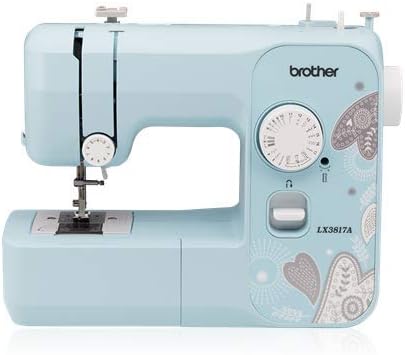
If you’ve been browsing Walmart’s sewing machine aisle or scrolling through Amazon looking for the cheapest way to start sewing, you’ve probably already seen the Brother LX3817 staring back at you.
It’s one of the most purchased sewing machines in the country, and at under $90, it’s easy to understand why. But here’s what the product listing won’t tell you: this machine is polarizing.
People either run it for years without a single complaint, or they’re leaving one-star reviews within a week swearing it’s defective. After digging through hundreds of real owner experiences across forums, repair threads, and review sections, I can tell you the truth is somewhere in the middle, and most of the problems come down to one thing nobody wants to hear.
So let’s talk about what the LX3817 actually delivers, who it’s really built for, and whether that extra $20 toward a better machine is worth it.

Brother LX3817 17-Stitch Full-Size Sewing Machine, Jam-Resistant Drop-In Bobbin, Free Arm, LED Work Area, 4 Included Sewing Feet.
Let me save you some time. If you're looking at the Brother LX3817, you're probably in one of three situations: you want to learn to sew without spending much, you need a basic machine for mending and alterations, or someone told you it was the cheapest option at Walmart and you want to know if it's actually any good.
The honest answer? It does what it's supposed to do, which isn't much. And that's kind of the point. This is a stripped-down mechanical sewing machine that does straight stitches and zigzags competently, and it'll cost you less than a nice dinner out. But you need to understand what you're buying and, more importantly, what you're not buying.
- Under $90 for a full-size machine that actually sews clean stitches on everyday fabrics
- Dead simple — no screens, no menus, just a dial and a foot pedal
- Weighs under 11 pounds, easy to stash in a closet or carry to a friend's house
- Drop-in bobbin is genuinely jam-resistant when threaded correctly
- No automatic needle threader, you're threading by hand every single time
- Only 4 presser feet included and no way to adjust stitch length or width
- 4-step manual buttonholes are frustrating, especially for beginners
- Bobbin tension issues plague new owners who skip the manual
Brother LX3817 Specifications
| Specification | Details |
|---|---|
| Machine Type | Mechanical |
| Ingebouwde steken | 17 (utility, decorative, blind hem, zigzag) |
| Knoopsgat | 1 style, 4-step manual |
| Weergave | None (dial selector) |
| Presser Feet Included | 4 (zigzag, zipper, buttonhole, button sewing) |
| Naaldinrijger | Manual (no auto-threader) |
| Bobbin Type | Top drop-in, jam-resistant |
| Max Sewing Speed | 850 stitches per minute |
| Snelheidscontrole | Foot pedal only (no slider) |
| Feed Dogs | Non-drop (darning plate included for free-motion) |
| Vrije arm | Ja |
| Wide Table | Not included |
| Koffer | Not included |
| Gewicht | ~10.8 lbs |
| Garantie | 25-year limited |
What You’re Actually Getting for $80
I think the biggest mistake people make with the LX3817 is comparing it to machines in the $150–200 range and then getting disappointed. That’s like buying a Honda Civic and being upset it doesn’t corner like a Porsche. You need to evaluate this machine against what else $80 buys you, and when you do that, it holds up better than you’d expect.
In the box you get the machine, four presser feet (zigzag, zipper, buttonhole, and button sewing), three bobbins, a pack of needles, a small screwdriver, a darning plate, a foot pedal, a power cord, and an instructional DVD. No hard case. No wide table. No accessory pouch full of extras like you’d get with a CS6000i.
The machine itself is small and light. Under 11 pounds, compact footprint, built-in carrying handle on the back. It’s the kind of machine that lives in a closet and comes out when you need it. The body is mostly plastic with an internal metal frame that provides basic rigidity. It doesn’t feel fragile, but it doesn’t feel industrial either.
The stitch selector is a simple rotating dial on the front. Turn it, pick your stitch, and go. There’s no LCD, no digital anything. Stitch length and width are preset and cannot be adjusted, what you see on the dial is what you get. For someone who’s overwhelmed by options, this is actually a feature, not a limitation. For someone who wants control, it’s going to feel restrictive fast.
The LED work light is decent — better than what you’d expect at this price, actually. Brother put a brighter light on this than on some of their more expensive machines, which is a small but welcome detail.
Pros of Brother LX3817
It Does the Basics Without Making You Think
There’s a specific type of person this machine was designed for, and I think Brother nailed it. If you just want to hem pants, sew a straight seam, do basic alterations, or make simple projects like tote bags and pillow covers, the LX3817 does all of that without asking you to learn a single technical concept first.
Turn the dial. Press the pedal. Sew.
That simplicity has legitimate value. I’ve watched people buy computerized machines with 60+ stitches and spend more time confused by the interface than actually sewing. The LX3817 skips that entirely. There are 17 stitches, they’re labeled on a reference chart printed right on the machine, and the dial clicks into position for each one. A 12-year-old could figure this out in five minutes.
The Drop-In Bobbin Actually Works Well
Brother’s jam-resistant drop-in bobbin is genuinely one of the better bobbin systems in budget sewing machines. The bobbin drops into a visible compartment under a clear plastic cover, and when it’s seated correctly, it feeds smoothly and rarely jams.
I want to emphasize “when seated correctly” because most of the jam complaints you’ll read online come from people who put the bobbin in backwards or didn’t pull the thread through the tension guide until it clicked. When the bobbin is installed properly, this machine is surprisingly reliable for continuous sewing on standard fabrics.
Under 11 Pounds and Built to Disappear
The LX3817 was designed for people who don’t have a dedicated sewing room. It weighs less than some laptops, has a tiny footprint, and tucks into a closet shelf without hogging space. The carrying handle is molded into the back of the machine body, so grabbing it and moving it takes two seconds.
If you’re in a small apartment, a dorm room, a travel trailer, or anywhere that space is at a premium, the LX3817’s size is a genuine selling point. Several RV and travel-trailer owners online specifically recommend this machine because it stores so easily and doesn’t need a permanent setup.
The Price Lets You Test the Waters Without Risk
This is the part that doesn’t get talked about enough in sewing machine reviews. Not everyone who buys a sewing machine is going to keep sewing. Some people try it, decide it’s not for them, and the machine ends up in a garage sale. Spending $80 on that experiment hurts a lot less than spending $200.
The LX3817 is an honest entry point. It gives you enough capability to learn the fundamentals — threading, tension, straight stitches, zigzag, basic seaming — without a financial commitment that creates pressure. If you love sewing, you’ll outgrow it and upgrade. If you don’t, you’re not out much.
Cons of Brother LX3817
No Automatic Needle Threader — And It Matters More Than You Think
Every machine above the LX3817 in Brother’s lineup includes an automatic needle threader. The LX3817 doesn’t. You’re threading the needle by hand, every time, squinting at a tiny eye and trying to push thread through it.
For experienced sewists, this is a minor annoyance. For beginners with shaky hands or imperfect eyesight, it’s a real obstacle. And if you’re changing thread colors frequently on a project, it turns into a time sink that slows down the entire workflow.
There are third-party needle threading tools you can buy for a few dollars, and they help. But the fact that the Brother GX37 — which usually costs only $20–30 more — includes an auto-threader is the single biggest reason I tell most people to consider stepping up from the LX3817.
You Cannot Adjust Stitch Length or Width
This is the limitation that experienced sewists will feel most. On the LX3817, every stitch has a preset length and width that cannot be changed. Pick stitch number 5, and you get the length and width Brother programmed for stitch number 5. That’s it.
On most other machines, even budget ones like the Brother GX37 or XM2701, you can widen a zigzag, shorten a straight stitch for reinforcement, or lengthen a basting stitch for temporary seams. The LX3817 takes all of those decisions away from you.
For basic mending and simple projects, the presets are fine. They’re set to reasonable defaults. But the moment you want to do something slightly non-standard, like a narrow zigzag for applique or a long basting stitch for gathering, you’re stuck.
The 4-Step Buttonhole Is Painful
Modern sewing machines, even cheap ones, typically offer one-step automatic buttonholes. You put the button in the foot, press go, and the machine sews a perfectly sized buttonhole. Done.
The LX3817 uses a 4-step manual buttonhole process. You sew one side, stop, adjust the dial, sew the bar tack, adjust again, sew the other side, adjust again, sew the closing bar tack. Each step requires you to reposition the fabric and change the dial setting. It’s tedious, error-prone, and the results are inconsistent if you’re new to the process.
If you’re never going to sew buttonholes, this doesn’t matter. But if you plan to make garments of any kind, the 4-step buttonhole on the LX3817 is going to test your patience in a way that a one-step machine simply doesn’t.
Brother LX3817 Bobbin Tension Problems
Here’s the thing about this machine and tension: the LX3817 reviews on Amazon and Walmart are sharply polarized. People either love it or call it junk. And having dug through forums, repair threads, and hundreds of user comments, my conclusion is that the tension issues are almost entirely caused by threading mistakes, not defective machines.
The most common scenario goes like this: someone buys the LX3817 as their first machine, doesn’t read the manual carefully, threads it incorrectly, and the machine produces tangled messes underneath the fabric. They leave a one-star review blaming the machine. Meanwhile, someone who followed the threading diagram carefully has the machine for three years without a single issue.
The LX3817’s tension system is basic — there’s a dial on the front that adjusts upper thread tension, and the bobbin tension is set at the factory. When both are working correctly, stitch quality is clean. But the threading path on this machine is less forgiving than on Brother’s computerized models. If the thread isn’t seated between the tension discs properly, or the bobbin is inserted in the wrong direction, things go sideways fast. And because there’s no error code display to tell you what’s wrong, beginners are left guessing.
My advice: read the manual threading section twice before you sew your first stitch. Thread with the presser foot raised. Make sure you hear the bobbin thread click into the tension guide. Use quality thread. If you do these things, the tension on the LX3817 works fine.
Who Should Buy the Brother LX3817?
It makes sense if you:
- Want the absolute cheapest way to start sewing and learn the basics
- Need a machine for occasional mending, hemming, and simple alterations
- Live in a small space and need something that stores easily
- Are buying a first machine for a kid or teen who’s curious about sewing
- Want a lightweight backup or travel machine that you won’t cry over if it gets damaged
Spend more and get a better machine if you:
- Want any level of stitch customization (length, width adjustment)
- Plan to sew buttonholes on garments
- Want an automatic needle threader
- Plan to quilt (no walking foot, no quilting foot, no wide table, no drop feed dogs)
- Think you’ll stick with sewing and want room to grow
Common Problems and How to Fix Them
Brother LX3817 Thread Jamming Under the Fabric
This is the number one complaint, and as I mentioned above, it’s almost always a threading problem. The fix sequence:
Power off the machine. Remove the fabric and clip any tangled thread. Pull out the bobbin and inspect the bobbin compartment for lint or loose thread fragments. Take a soft brush or the one included with the machine and clean the area under the needle plate.
Now rethread completely. Upper thread first, with the presser foot raised. Follow the numbered guides printed on the machine exactly. Make sure the thread is fully seated between the tension discs (you should feel slight resistance when you pull the thread with the foot down). Then reinstall the bobbin, pulling the thread through the guide slot until it clicks into the tension spring.
Test on a scrap of fabric. If the stitches are even on both sides, you’re good.
Brother LX3817 Bobbin Thread Not Catching
The needle isn’t grabbing the bobbin thread during the stitch cycle. This usually means the needle isn’t installed correctly (flat side should face the back of the machine), the needle is bent or dull, or the bobbin isn’t seated flat in the compartment.
Replace the needle with a fresh one. Make sure it’s pushed all the way up into the clamp and tightened firmly. Verify the bobbin is sitting flat and the thread is pulling in the correct direction. Turn the hand wheel slowly toward you, you should see the upper thread loop down and pull the bobbin thread up through the needle plate.
Brother LX3817 Skipping Stitches
Skipped stitches usually mean the needle isn’t right for the fabric. The LX3817 ships with a size 11 needle, which works for lightweight cotton and similar fabrics. If you’re sewing knits, you need a ballpoint needle. If you’re sewing anything medium-weight or heavier, step up to a size 14. Also check that the needle isn’t bent, even a slight bend can cause the hook to miss the thread loop.
Can the Brother LX3817 Sew Denim?
A single layer or two layers of lightweight denim, yes, with a size 14 or 16 needle and slow pedal speed. The machine can get through it. But anything beyond that, hemming thick jeans, sewing through multiple denim layers at seam junctions — is pushing the LX3817 beyond what it’s built for. The motor doesn’t have the torque, and the plastic body doesn’t have the stability. If you hear the machine straining, stop. Use the hand wheel to manually walk through thick spots.
Brother LX3817 vs Brother GX37
This is the comparison that matters most, because the GX37 is the natural step up from the LX3817 and usually costs only $20–30 more.
| Functie | LX3817 | GX37 |
|---|---|---|
| Hechtingen | 17 | 37 |
| Knoopsgat | 4-step manual | 1-step automatic |
| Naaldinrijger | Handmatig | Automatisch |
| Stitch Adjustability | No (preset only) | Yes (adjustable length & width) |
| Naaivoeten | 4 | 6 |
| Max Speed | 850 spm | 850 spm |
| Gewicht | ~10.8 lbs | ~12.8 lbs |
| Vrije arm | Ja | Ja |
| Wide Table | Nee | Nee |
| Prijs | ~$80 | ~$100–110 |
I’ll be direct: for most people, the GX37 is the better buy. The automatic needle threader, adjustable stitch length and width, one-step buttonhole, and additional presser feet are meaningful upgrades that make the sewing experience substantially better, and the price difference is small.
The only scenario where the LX3817 makes more sense is if your budget is genuinely hard-capped under $90, or if you specifically want the absolute simplest machine possible because complexity intimidates you. In those cases, the LX3817 is fine. But if you can stretch another $20–30, the GX37 is the machine I’d recommend.
Brother LX3817 vs Brother CS6000i
This is less of a head-to-head and more of a “different universe” comparison. But people search for it, so let’s lay it out.
| Functie | LX3817 | CS6000i |
|---|---|---|
| Machine Type | Mechanical | Computerized |
| Hechtingen | 17 | 60 |
| Knoopsgat | 4-step manual | 7 styles, 1-step auto |
| Weergave | Geen | LCD |
| Naaldinrijger | Handmatig | Automatisch |
| Stitch Adjustability | Geen | Full (length & width) |
| Naaivoeten | 4 | 9 (includes walking foot & quilting foot) |
| Snelheidscontrole | Foot pedal only | Adjustable slider + foot pedal |
| Quilting Ready | Nee | Yes (drop feed dogs, wide table, quilting feet) |
| Koffer | Not included | Hard case included |
| Gewicht | ~10.8 lbs | ~13 lbs |
| Prijs | ~$80 | ~$170 |
The CS6000i costs roughly double and gives you roughly five times the capability. If there’s any chance you’ll get into quilting, decorative stitching, or garment-making beyond basic alterations, the CS6000i is worth the extra money. It’s a machine that grows with you. The LX3817 is a machine you’ll grow out of.
But that comparison isn’t fair to the LX3817, because it’s not trying to be a CS6000i. It’s trying to be the cheapest functional sewing machine Brother can sell, and it succeeds at that.
Brother LX3817 vs Singer Start 1304
These two fight it out at the bottom of the price bracket, and both brands have large followings at this level.
| Functie | Brother LX3817 | Singer Start 1304 |
|---|---|---|
| Hechtingen | 17 | 6 |
| Knoopsgat | 4-step | 4-step |
| Bobbin Type | Top drop-in | Top drop-in |
| Naaldinrijger | Handmatig | Handmatig |
| Stitch Adjustability | Preset only | Preset only |
| Naaivoeten | 4 | 3 |
| Max Speed | 850 spm | 750 spm |
| Frame | Internal metal frame, plastic body | Internal metal frame, plastic body |
| Gewicht | ~10.8 lbs | ~11.5 lbs |
| Prijs | ~$80 | ~$85 |
The LX3817 wins this one. More stitches, more presser feet, faster max speed, and slightly cheaper. The Singer Start 1304 offers only 6 stitches, which is extremely limited even for basic sewing. Both lack needle threaders and stitch adjustability, but the Brother gives you nearly three times the stitch options.
De Singer M1500 (the 1304’s successor) does offer 57 stitch applications and is worth looking at if you’re considering Singer, but it also costs slightly more and uses a front-loading bobbin instead of a top drop-in, which most beginners find harder to work with.
Veel Gestelde Vragen
Is the Brother LX3817 Good for Beginners?
Yes and no. It’s good for beginners who want simplicity above all else, no screens, no complicated menus, just a dial and a pedal. It will teach you the fundamental skills of sewing: threading, tension, guiding fabric, and producing basic stitches.
Where it falls short for beginners is in the missing features that actually make learning easier. No auto-threader means more frustration threading the needle. No adjustable stitch length means less flexibility to correct problems. No speed slider means the foot pedal is your only speed control, and foot pedals take practice to manage smoothly.
If budget is your primary constraint, the LX3817 is a perfectly adequate starting point. If you can afford $30 more, the Brother GX37 or XM2701 are better beginner machines because they include the features that actually reduce the learning curve.
Can the Brother LX3817 Quilt?
In the most basic sense, piecing quilt tops with straight seams, yes. The machine can sew two pieces of cotton together all day long. For simple patchwork piecing, it’ll get the job done.
But for actual quilting (sewing through the quilt sandwich of top, batting, and backing), the LX3817 is not equipped. It doesn’t come with a walking foot, doesn’t include a quilting foot, doesn’t have a wide table for managing bulky fabric, and the feed dogs don’t drop. You can cover the feed dogs with the included darning plate for a rough version of free-motion work, but the results are inconsistent and there’s no spring-action quilting foot to help control the fabric.
If quilting is even a remote possibility for you, start with the CS6000i or CS7000X instead. They come quilting-ready out of the box.
Is the Brother LX3817 the Same as the LX3817A and LX3817G?
Yes. The LX3817, LX3817A, and LX3817G are identical machines with different colors. The LX3817 is white with blue paisley accents. The LX3817A is aqua with gray hearts. The LX3817G is gray with a geometric print. Same stitches, same features, same dimensions, same everything. Pick whichever color you like.
Can the Brother LX3817 Sew Leather?
No. Thin faux leather might technically be possible with a heavy needle and extremely slow hand-wheel sewing, but this machine is not designed for it. The motor and frame aren’t built for the resistance that leather creates, and forcing it will bend needles, damage the timing, and potentially ruin the machine. If leather is in your plans, you need a heavy-duty machine at minimum.
What Bobbins Does the Brother LX3817 Use?
The LX3817 uses SA156 bobbins (Class 15 type). These are the same bobbins used by most of Brother’s home sewing machines, including the CS6000i, GX37, and XM2701. Use transparent plastic bobbins only — never metal. Slightly off-spec generic bobbins are a common hidden cause of tension problems on this machine, so stick with Brother-branded or well-reviewed compatible bobbins.
Why Does My Brother LX3817 Keep Jamming?
Almost every jamming issue on this machine traces back to one of these causes:
Top thread not seated between the tension discs (thread with the presser foot up). Bobbin inserted in the wrong direction (thread should pull to the left). Bobbin thread not clicked into the tension spring under the needle plate cover. Using cheap thread that shreds and leaves lint in the mechanism. Needle installed backwards or not pushed fully into the clamp.
Go through each of these systematically. In most cases, the jam stops after correcting one of them. If jamming persists after verifying all of the above, clean the bobbin area thoroughly and try a fresh needle.
Is the Brother LX3817 Worth It?
At $80, yes — if your expectations are calibrated correctly. It’s a basic mechanical sewing machine that produces clean stitches on light-to-medium fabrics, handles simple projects reliably, and costs less than most kitchen appliances. It’s not going to grow with you if sewing becomes a serious hobby, but it’s an honest machine at an honest price.
If you can spend $100–110, the Brother GX37 gives you meaningfully more capability for not much more money. And if you can stretch to $170, the CS6000i is in a different league entirely. But within the sub-$100 category, the LX3817 does what it promises.
Final Verdict
The Brother LX3817 is the Honda Civic of sewing machines. It’s not exciting. It’s not going to impress anyone at a sewing retreat. It doesn’t have features that make experienced sewists jealous. But it starts every time, it gets you from point A to point B, and it doesn’t cost much to own.
For people who want to test the sewing waters without financial risk, who need a basic machine for occasional mending, or who just want something small and simple that works, the LX3817 delivers. It produces clean stitches on cotton and everyday fabrics, the bobbin system is reliable when used correctly, and the 25-year warranty means Brother stands behind it even at this price point.
Where it falls short is in everything beyond the basics. No needle threader. No stitch adjustment. No quilting capability. No speed control beyond the pedal. No carrying case. These aren’t flaws, they’re tradeoffs you make at $80.
My honest recommendation: if you’re on the fence between the LX3817 and spending $20–30 more on the Brother GX37, spend the extra money. The auto-threader, adjustable stitches, and one-step buttonhole make a tangible difference in how enjoyable sewing feels. But if $80 is genuinely your ceiling, the LX3817 won’t let you down for what it’s designed to do.
It’s a starter machine. It knows it’s a starter machine. And for that job, it works.
Bent u een gevorderde naaister, kijk dan eens bij onze beste naaimachines, beste naaiboeken En beste naaitijdschriften berichten en als u op zoek bent naar een mechanisch, zwaar uitgevoerd, quilten of industriële naaimachine, bekijk enkele van onze geweldige artikelen. Als u een beginnende naaister bent, bekijk dan onze beste naaiboeken voor beginners, beste naaimachines voor beginners En beste naaimachines onder $200 starten.
Voor merkgerelateerde artikelen, check Beste Bernette | Beste Bernina | Beste Brother | Beste Husqvarna Viking | Beste Janome | Beste Juki | Beste Singer |
Voor de beste accessoires, check Beste stoelen | Beste tafels | Beste calqueerpapier | Beste machineoliën | Beste scharen en scharen | Beste naaivoeten | Beste naalden | Beste naaisetjes |
Veel plezier met naaien.


