
Openbaarmaking van partners: SewingInsight.com is deelnemer aan het Ebay Partner Network en Amazon Services LLC Associates Program. We verdienen een kleine advertentievergoeding door te linken naar producten op Ebay en Amazon. Dit verhoogt de prijs voor u als lezer niet, maar u steunt onze kleine onderneming.

Review van de Brother CS6000i: Amazons bestseller getest aan de hand van de hype.
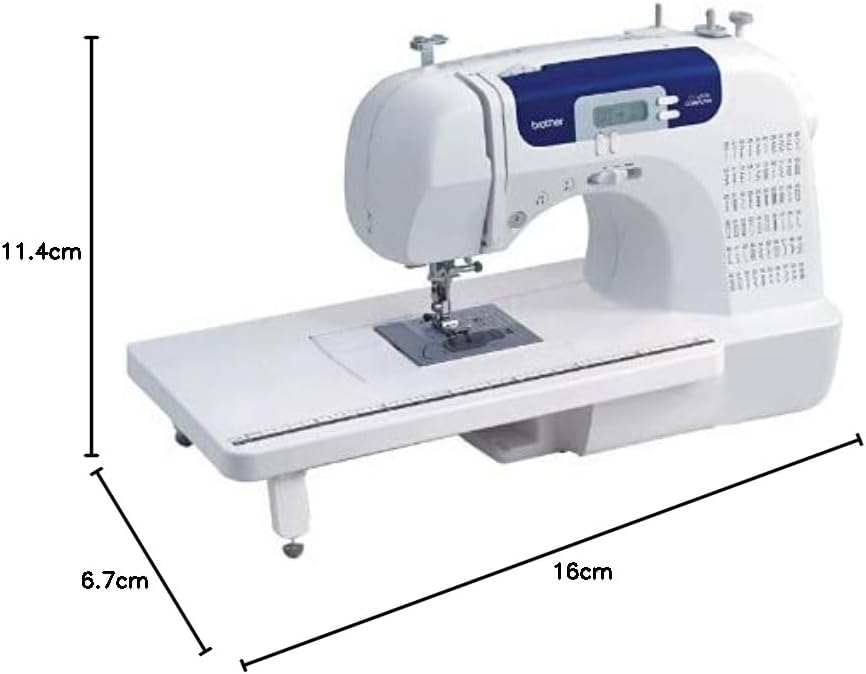
The Brother CS6000i has been Amazon’s bestselling sewing machine for years, and it didn’t get there by accident.
It’s the machine that sewing instructors recommend to their students, that quilten groups swear by for travel, and that first-time sewists buy when they don’t want to waste money on something they’ll outgrow in six months.
But it’s also the machine that frustrated owners return because they expected it to power through four layers of denim on a Tuesday afternoon.
So before you add it to your cart, let’s get into what this machine actually does well, where it genuinely falls short, and whether it still makes sense to buy one in 2026 when Brother has already released two newer models.

Brother CS6000i Sewing Machine, 60 Built-in Stitches, LCD Display, Wide Table, 9 Included Sewing Feet, Computerized, Hard Carrying Case, Automatic Needle Threader, 25-Year Warranty.
There's a reason this machine has spent over a decade sitting at or near the top of Amazon's bestseller list — and it's not because Brother has a magic marketing team. The CS6000i just quietly does what most beginners and intermediate sewists actually need, at a price that doesn't make you second-guess yourself.
That said, I've watched enough people buy this machine expecting it to do everything and then get frustrated when it won't punch through four layers of Levi's. So let's talk about what it actually does, where it falls flat, and whether it still makes sense to buy one in 2026 when newer models exist.
- You get more out of the box than machines costing twice as much — 9 presser feet, wide table, walking foot, hard case
- The speed slider is the unsung hero for anyone who's never sat behind a sewing machine before
- Handles quilting better than any sub-$200 machine has a right to
- Stitch quality on everyday fabrics is genuinely impressive for this price tier
- The needle threader has the durability of wet cardboard — it will likely fail on you eventually
- Anything heavier than medium-weight denim is asking for trouble
- At full speed, this thing scoots across your table like it's trying to escape
- Bobbin drama is practically a rite of passage for new CS6000i owners
Brother CS6000i Specifications
| Specification | Details |
|---|---|
| Ingebouwde steken | 60 (utility, decorative, quilting, heirloom) |
| Knoopsgatstijlen | 7 one-step auto-size |
| Weergave | 2.0″ backlit LCD |
| Presser Feet Included | 9 (zigzag, buttonhole, overcasting, monogramming, zipper, blindstitch, button fitting, walking, spring-action quilting) |
| Bobbin Type | Top drop-in, jam-resistant (SA156 / Class 15) |
| Naaldinrijger | Automatisch |
| Max Sewing Speed | 850 stitches per minute |
| Snelheidscontrole | Adjustable slider + foot pedal |
| Feed Dogs | Drop feed dogs for free-motion quilting |
| Vrije arm | Yes (detachable front compartment) |
| Wide Table | Detachable oversized table included |
| Gewicht | ~13 lbs |
| Koffer | Hard protective case included |
| Garantie | 25-year limited |
What Shows Up in the Box (And Why It Matters)
I want to start here because this is actually where the CS6000i separates itself from most machines in its price range, and most reviews breeze right past it.
When you open the box, you’re not just getting a machine and a couple of basic feet. You’re getting nine presser feet. A walking foot. A spring-action quilting foot. A wide table extension. A hard carrying case. Bobbins. A twin needle. A full accessory pouch with a seam ripper, cleaning brush, screwdriver, and extra needles.
That matters because with competing machines — the Singer
A hard case is another $30 to $50. The CS6000i bundles all of it from the start, which makes the real cost comparison look quite different than what the sticker price tells you.
The machine itself feels lighter than you’d expect. At 13 pounds, it’s easy to move around, easy to carry to a class or a sewing group. The plastic body won’t win any beauty contests, but it’s functional. The LCD screen is small and basic, it shows your selected stitch and settings without any fuss. It’s not a touchscreen, just a backlit display with buttons beside it. Does the job.
One thing I wish Brother had done better: the work light. The LED is adequate in a well-lit room, but if you’re sewing in the evening or working with dark fabrics, it’s not bright enough. You’ll probably end up clipping a desk lamp nearby. It’s a minor thing, but after 10+ years of manufacturing this model, you’d think they’d have fixed it by now.
Pros of Brother CS6000i
The Speed Slider Changes Everything for New Sewists
Most reviews mention the speed slider and move on. I want to actually explain why this feature is the single biggest reason the CS6000i works so well as a first machine.
When you’re learning to sew, the foot pedal is terrifying. You press a little too hard and suddenly your fabric is shooting through like it’s on a conveyor belt. The speed slider on the CS6000i puts a hard cap on how fast the machine will go, regardless of what your foot does. Set it to slow, and the machine maxes out at a manageable pace. You can focus on guiding your fabric and learning stitch control without the machine running away from you.
I’ve watched brand-new sewists sit down at this machine and produce straight, usable seams within their first session. That doesn’t happen with machines that only give you a foot pedal and a prayer. And if you don’t want to use the pedal at all, there’s a start/stop button right on the front of the machine. Sew hands-free with your feet up. It sounds like a gimmick until you’ve spent three hours behind a machine and your foot is cramping.
Quilting Capability That Punches Above Its Weight
Here’s something I don’t see discussed enough: the CS6000i is, dollar for dollar, one of the most complete quilting-ready machines you can buy under $200.
Drop feed dogs for free-motion work? Included. Walking foot for even feeding through layers? Included. Spring-action quilting foot? Included. Wide table that gives you actual workspace? Included. Seven dedicated quilting stitches built into the machine? Included.
I’ve talked to people who have pieced entire queen-size quilt tops on this machine without complaint. The piecing is smooth, the stitch length stays consistent, and the walking foot handles batting layers competently. Where it runs out of steam is the throat space, the gap between the needle and the body of the machine is tight, so maneuvering a full-size quilt during free-motion quilting is a wrestling match. For lap quilts, wall hangings, and baby quilts, it handles beautifully. For king-size bed quilts, you’ll be cursing under your breath by the third pass.
Stitch Quality That Doesn’t Embarrass You
I’ll be blunt, plenty of budget sewing machines produce stitches that look like they were done by someone sewing blindfolded during an earthquake. The CS6000i doesn’t have that problem.
On cotton, linen, jersey knits, and light wovens, the stitch quality is clean and even. Decorative stitches come out crisp. Buttonholes look finished and professional. The tension holds steady when you’ve threaded everything correctly, and the feed dogs move fabric through at a consistent rate. For garments, home decor projects, gifts, and everyday mending, the results are genuinely hard to tell apart from machines that cost two or three times more.
The Numbered Threading Path Is Brilliantly Simple
Threading a sewing machine for the first time is confusing. Every experienced sewist forgets how intimidating it is. Brother solved this on the CS6000i by printing numbers directly on the machine body. Literally follow 1 through 6 and you’re threaded. There’s a diagram for bobbin winding too.
Paired with the top drop-in bobbin (which is visible through a clear cover so you can see your thread supply without removing anything), the setup process on this machine is about as painless as it gets. Most people can go from unboxing to sewing their first test stitches in under 20 minutes.
Cons of Brother CS6000i
This Machine Has a Ceiling — And Heavy Fabrics Are It
I’m going to be more specific than most reviewers here, because “doesn’t handle thick fabrics” is vague and unhelpful.
Here’s what the CS6000i handles fine: a single layer of medium-weight denim. Two layers of quilting cotton. Knits with a ballpoint needle. Corduroy. Light canvas. These are within its wheelhouse, and it sews them without drama.
Here’s where it starts to struggle: hemming jeans where four layers of denim stack up at the side seams. Sewing through multiple layers of canvas. Any real leather. Thick interfacing layered with denim. Heavy upholstery fabric.
The motor doesn’t have the torque. You’ll hear it strain, the needle may deflect off the fabric, and you risk bending or snapping the needle — which can nick the needle plate and create ongoing stitch problems. The advice I give people is this: if the machine sounds unhappy, stop. Don’t force it. Walk those thick spots through manually with the hand wheel, or accept that the project needs a heavier machine.
If denim and canvas are the majority of what you sew, this is not your machine. Look at the Singer
The Needle Threader Is Living on Borrowed Time
Let me describe what happens. The CS6000i has an automatic needle threader with a small metal hook that’s supposed to grab your thread and pull it through the needle eye. It works well… initially. Then the hook bends slightly. Maybe you pushed it while the needle wasn’t at the right height. Maybe it just fatigued from regular use. Once that hook is bent even a fraction, the threader becomes useless.
This isn’t unique to the CS6000i, the CS7000i has the same issue. Brother finally addressed it with the CS7000X by adding plastic guards around the hook, which helps. But on the CS6000i, the threader is essentially a consumable feature. Enjoy it while it lasts, and learn to thread by hand so you’re not stuck when it inevitably gives out.
It’s not a dealbreaker. Millions of sewists have threaded needles by hand since the invention of the sewing machine. But it’s annoying when a feature that’s printed on the box stops working.
Bobbin Tension Will Test Your Patience Early On
Every sewing forum has a recurring thread (no pun intended) that goes something like this: “Help! My CS6000i is making a mess on the bottom of my fabric!”
The usual suspect is the top thread, not the bobbin — even though it shows up on the bottom. The number one cause is threading the machine with the presser foot in the down position. When the foot is down, the tension discs are closed, and the thread doesn’t seat between them properly. You end up with zero tension on the top thread, which creates loops and tangles underneath.
Other common causes: bobbin inserted in the wrong rotational direction. Thread not pulled through the bobbin case tension spring (you need to hear and feel a click). Using bargain-bin thread that shreds and leaves lint in the tension mechanism. Or a bobbin that’s slightly out of spec — this happens with cheap generic bobbins more often than people realize.
Once you learn the proper threading sequence and stick with decent thread (Gutermann, Coats & Clark, or Brother branded), the tension issues largely disappear. But that first week or two of figuring it out? It’s frustrating, and I wish Brother provided better troubleshooting guidance in the quick-start materials.
13 Pounds of Machine That Wants to Travel
The light weight is fantastic for portability. It’s not so fantastic for stability. Push the speed slider to max and this machine vibrates noticeably. On a smooth desk, it can actually walk itself toward the edge during a long sewing run.
The fix is simple: put a rubber shelf liner, a yoga mat offcut, or even a folded towel under the machine. It kills the vibration and keeps everything in place. But it’s one of those things Brother could have solved with rubber feet or a slightly heavier base, and they chose not to.
Who Should Buy the Brother CS6000i?
It’s a strong fit if you are:
- Starting out and want a machine that teaches you well and grows with you
- Sewing garments, home decor, quilts, kids’ clothes, or gifts from standard fabrics
- Looking for a take-anywhere machine for classes, sewing groups, or travel
- On a budget but unwilling to settle for a featureless basic machine
- A quilter who needs piecing and free-motion capability without spending $400+
Look elsewhere if you:
- Sew denim, leather, or heavy canvas regularly
- Need a wide throat space for large free-motion quilting projects
- Prioritize absolute stability and a rock-solid build over portability
- Want embroidery capability (the CS6000i does decorative stitches, not machine embroidery)
Common Problems and How to Fix Them
Brother CS6000i E6 Error Code Fix
E6 means the machine detected twisted thread. It’s the most reported error code on this model. Here’s the fix sequence:
Power off. Remove your fabric. Clip any tangled thread and pull it clear. Take out the bobbin and clean the bobbin area — lint buildup under the needle plate is the hidden culprit more often than people think. Rethread everything from scratch: top thread with presser foot raised, bobbin inserted and clicked into the tension spring. Test on a scrap.
If E6 keeps coming back, take a piece of unwaxed dental floss and slide it between the upper tension discs while the tension dial is set to zero. This dislodges lint or thread fragments that are preventing the discs from gripping your thread. It’s an old trick from sewing machine technicians that works remarkably well.
Thread Bunching on the Underside of Fabric
This is the single most common complaint from new CS6000i owners, and it’s almost never a bobbin problem despite appearing on the bobbin side.
The cause is almost always improper top threading. Specifically: threading with the presser foot down. The presser foot lever controls whether the tension discs are open or closed. Foot down = discs closed = thread can’t seat between them = no tension on the top thread = thread pools underneath your fabric in messy loops.
Raise the presser foot. Rethread from the spool pin all the way to the needle. Lower the foot. Sew a test line. In 90% of cases, the problem disappears immediately.
Needle Breaking or Bending
If you’re breaking needles, something is pushing the needle sideways during the stitch cycle. The usual causes: pulling or pushing fabric through instead of letting the feed dogs do the work, using a needle that’s too thin for the fabric weight, a loose needle that isn’t fully tightened in the clamp, or sewing over a pin.
Swap in a fresh needle appropriate for your fabric weight (size 11 for lightweight, 14 for medium, 16 for heavier), tighten it firmly with the flat side facing back, and let the machine feed the fabric at its own pace. If you’re sewing through a thick spot, slow down or use the hand wheel to walk through it manually.
Brother CS6000i vs CS7000X — Which One Should You Actually Buy?
| Functie | CS6000i | CS7000X |
|---|---|---|
| Hechtingen | 60 | 70 |
| Naaivoeten | 9 | 10 (adds 1/4″ piecing foot) |
| Naaldinrijger | Metal hook (bends easily) | Plastic-guarded hook (more durable) |
| Max Speed | 850 spm | 750 spm |
| Tension Dial | Top of machine | Front of machine |
| Needle Bar | Standaard | Fixed (better free-motion stability) |
| Hard hoesje | Included | Not included |
| Body Design | Rounded, navy blue | Boxier, white/light blue |
| Prijs | ~$170 | ~$170–200 |
If you’re buying fresh today and both are available at similar prices, get the CS7000X. The improved needle threader and fixed needle bar are meaningful upgrades, especially if you plan to do any free-motion quilting. The lower max speed (750 vs 850 spm) is barely noticeable in practice — most home sewists never sew at full speed anyway.
If you already own a CS6000i and it’s running well, don’t bother upgrading. The core machine is mechanically identical. You’re not missing anything that justifies spending another $170. All the presser feet, bobbins, and accessories are interchangeable across the entire CS series, so anything you buy for one works on the other.
One thing worth noting: the CS6000i includes a hard case. The CS7000X does not. If portability matters to you, factor in the $30–50 cost of buying a case separately for the CS7000X.
Brother CS6000i vs Singer 4423 Heavy Duty — Two Different Machines for Two Different People
I see this comparison everywhere, and it drives me slightly crazy because these machines aren’t really competitors. They’re designed for completely different sewing situations. But people cross-shop them constantly, so here’s the honest breakdown.
| CS6000i | Singer | |
|---|---|---|
| Type | Computerized | Mechanical |
| Hechtingen | 60 | 23 |
| Max Speed | 850 spm | 1,100 spm |
| Frame | Plastic | Heavy-duty metal |
| Quilting Ready | Yes (walking foot, quilting foot, wide table, drop feed dogs all included) | Minimal (no walking foot, no wide table) |
| Heavy Fabric Handling | Limited | Strong — denim, canvas, light leather |
| LCD Display | Ja | Nee |
| Snelheidscontrole | Adjustable slider + foot pedal | Foot pedal only |
| Gewicht | ~13 lbs | ~14.5 lbs |
The CS6000i is the creative all-rounder. It gives you stitch variety, quilting tools, computerized convenience, and handles a wide range of standard fabrics with excellent stitch quality. It’s the machine for someone who wants to explore different types of sewing.
De Singer
Ask yourself one question: Am I going to sew heavy fabrics most of the time, or light-to-medium fabrics most of the time? Your answer picks the machine for you.
Veel Gestelde Vragen
Is the Brother CS6000i Good for Beginners?
It’s one of the best beginner machines ever made, and that’s not hyperbole. The numbered threading system, adjustable speed cap, LCD stitch selection, and the forgiving drop-in bobbin system all combine to flatten the learning curve in a way that most machines at any price don’t manage.
Sewing instructors have been recommending this machine to students for over a decade. It’s been the machine in library makerspaces, community college sewing labs, and 4-H programs across the country. If a 14-year-old who’s never touched a sewing machine can produce a tote bag on their first session with the CS6000i, it’s beginner-friendly.
Is the Brother CS6000i Good for Quilting?
Better than it has any right to be at this price. The included walking foot, spring-action quilting foot, drop feed dogs, wide table, and seven quilting stitches give you a legitimate quilting setup without buying a single extra accessory.
Piecing is where this machine shines — consistent 1/4″ seams all day long. Free-motion quilting works but the narrow throat space limits you on larger projects. If quilting is your primary focus and you’re working on anything bigger than a throw, you’ll eventually outgrow this machine. But as a starting point for learning the craft, it’s hard to argue with.
Can the Brother CS6000i Sew Denim?
A single layer or two layers of standard denim weight? Yes, with a 90/14 or 100/16 needle and moderate speed. Hemming jeans where you hit the thick seam stacks? Use the hand wheel to walk through those intersections manually. Four-plus layers of heavy denim? No. The machine will struggle, needles will break, and you risk damaging the timing.
The key principle: if the machine sounds strained, slow down or stop. It’s telling you something.
Can the Brother CS6000i Sew Leather?
Faux leather and very thin suede can work in a pinch with a leather needle and careful, slow sewing. Real leather of any meaningful thickness is beyond what this machine can reliably handle. If you’re doing leather as a primary material, you need a different machine entirely.
Is the Brother CS6000i Being Discontinued?
Brother has released two newer models in the same line — the CS7000i and the CS7000X — but as of early 2026, the CS6000i is still available for purchase. Parts, bobbins, needles, and presser feet remain widely available and interchangeable across the series. Brother still honors the 25-year warranty and provides free lifetime technical support.
What Bobbins Does the Brother CS6000i Use?
SA156 bobbins, Class 15 type. Transparent plastic only — never use metal bobbins in this machine. Stick with Brother-branded bobbins or well-reviewed compatible ones that match the exact spec. Slightly off-size generic bobbins are a sneaky source of tension problems that will drive you in circles trying to diagnose.
Brother CS6000i vs CS7000i — Is the Upgrade Worth It?
The CS7000i adds 10 decorative stitches and a 1/4″ piecing foot. Everything else — the frame, the motor, the bobbin system, the LCD, the threading — is identical. If the CS7000i costs $10–15 more, the piecing foot alone is worth it. If it costs $40+ more, save your money and buy a piecing foot separately for under $10.
Does the Brother CS6000i Come With a Walking Foot?
Yes. This is one of the strongest selling points of the CS6000i — the walking foot is included in the box. Most machines at this price make you buy it as an add-on.
Can the Brother CS6000i Do Free-Motion Quilting?
Yes. Drop the feed dogs, attach the spring-action quilting foot, and you’re set up for free-motion work. For best results, switch to straight stitch with center needle position and test your tension on a quilting sandwich before starting on your actual project. It takes practice to develop smooth, consistent movement, but the machine itself handles free-motion without issue.
Final Verdict
After digging through years of forum threads, long-term owner updates, repair tech insights, and stacking it against the competition, my take on the CS6000i is pretty straightforward: it’s still one of the smartest sewing machine purchases you can make if you know what you’re getting.
You’re getting a machine that sews beautifully on everyday fabrics. That quilts competently. That comes loaded with accessories most competitors charge extra for. That travels easily. That beginners can figure out in an afternoon. And that experienced sewists can use productively for years.
You’re not getting a heavy-duty powerhouse. You’re not getting a wide-throat quilting beast. You’re not getting a bulletproof needle threader.
And honestly? That tradeoff is perfectly reasonable for a machine under $200.
If you’ve been going back and forth on whether to pull the trigger — whether you’re buying your first machine, replacing an old clunker, or picking up a second machine for travel — the CS6000i is still an easy recommendation. It earned its reputation. It keeps earning it.
Bent u een gevorderde naaister, kijk dan eens bij onze beste naaimachines, beste naaiboeken En beste naaitijdschriften berichten en als u op zoek bent naar een mechanisch, zwaar uitgevoerd, quilten of industriële naaimachine, bekijk enkele van onze geweldige artikelen. Als u een beginnende naaister bent, bekijk dan onze beste naaiboeken voor beginners, beste naaimachines voor beginners En beste naaimachines onder $200 starten.
Voor merkgerelateerde artikelen, check Beste Bernette | Beste Bernina | Beste Brother | Beste Husqvarna Viking | Beste Janome | Beste Juki | Beste Singer |
Voor de beste accessoires, check Beste stoelen | Beste tafels | Beste calqueerpapier | Beste machineoliën | Beste scharen en scharen | Beste naaivoeten | Beste naalden | Beste naaisetjes |
Veel plezier met naaien.


